How to Find Cheap Long Distance Car Transport Options You Can Trust
Finding affordable and reliable options for cheap long distance car transport is a crucial consideration for many individuals and businesses today. According to the American Trucking Associations, the transportation industry in the United States alone generates over $700 billion annually, highlighting the significance and growth of vehicle shipping services. With the rise of e-commerce and the increasing movement of goods across the country, demand for long-distance car transport has surged. However, with numerous carriers and options available, consumers often face challenges in identifying trustworthy and economical services.
Research indicates that costs for long-distance car transport can vary significantly based on factors such as distance, vehicle type, and transport method. In some cases, average quotes for transporting a vehicle across the country can range from $800 to $1,500 or more, depending on these variables. This variability underscores the importance of thorough research and comparison when seeking cheap long distance car transport. By leveraging industry reports and consumer reviews, potential customers can uncover strategies to mitigate costs while ensuring their vehicles are handled with care by reputable transport providers.

Understanding Long Distance Car Transport Services
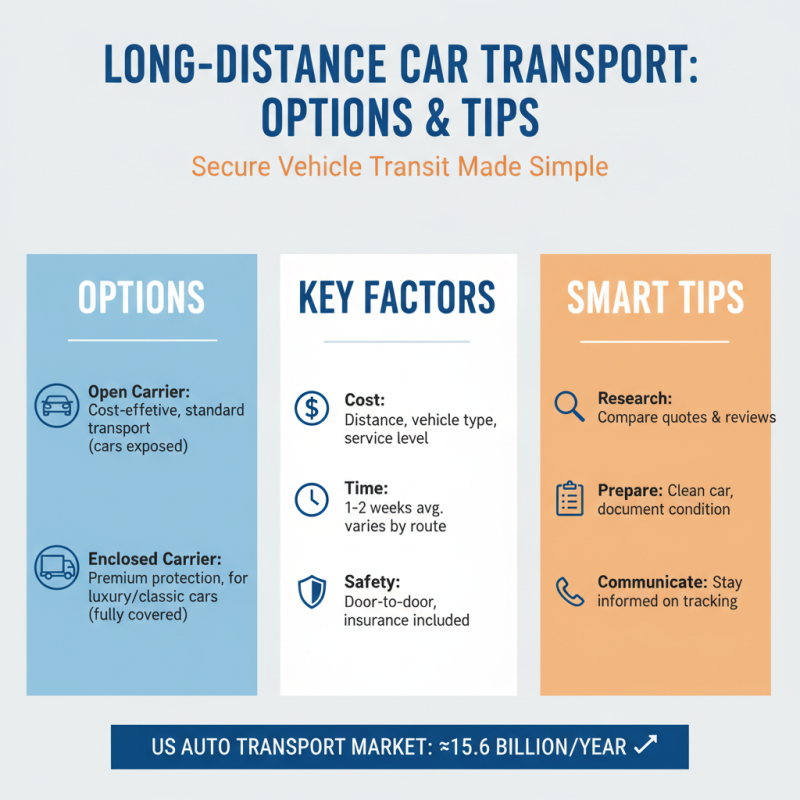
When considering long distance car transport services, understanding the various options available can help you make an informed decision while ensuring your vehicle is safe and secure during transit. The industry has seen significant growth, with estimates indicating that the US auto transport sector reaches approximately $15.6 billion annually. This growth reflects the increasing demand for reliable and efficient vehicle transportation as more people relocate across states or purchase vehicles from distant sellers.
There are primarily two types of long distance car transport methods: open and enclosed transport. Open transport, which accounts for over 75% of vehicle transport, is often more affordable and involves transporting vehicles on open carriers. However, it's important to note that this method may expose vehicles to the elements. On the other hand, enclosed transport provides better protection, shielding vehicles from weather and road debris, but typically comes at a higher cost. According to data from the American Moving and Storage Association, the average cost of open transport is around $0.50 to $1.00 per mile, while enclosed transport can range from $1.00 to $2.00 per mile depending on factors like distance and vehicle type.
It's crucial to also consider the reputation and reliability of transport services. Research shows that about 30% of consumers report issues with their auto transport services, usually stemming from poor communication and lack of transparency in pricing. Utilizing resources such as the Better Business Bureau and online reviews can offer insights into a company's trustworthiness. By thoroughly understanding these aspects of long distance car transport, consumers can navigate their options more effectively and make choices that align with their needs and budget.
Identifying Your Transport Needs and Budget
When considering long distance car transport, the first step is to clearly identify your transport needs. This involves evaluating the type of vehicle you are shipping, the distance it will travel, and the timeframe for delivery. Understanding whether you require open or enclosed transport is crucial, as each option offers different levels of protection and cost. Additionally, determining the age and condition of your vehicle can help you decide on the appropriate method. Newer cars may warrant extra care, while older models might have different requirements.
Budgeting plays a significant role in selecting an affordable car transport service. Start by researching average costs in the industry for distances similar to what you need, which can vary based on factors such as seasonality and vehicle size. Be mindful of additional fees that can arise, including insurance, fuel surcharges, and special handling charges. Create a realistic budget that includes these potential costs, and explore various quotes from different transporters. This will help you assess which options deliver value without compromising the safety and reliability of your vehicle's journey.
Researching Trustworthy Car Transport Companies
When researching trustworthy car transport companies for long-distance transport, it is essential to focus on a few key indicators. Industry reports, such as those from the American Transportation Research Institute, reveal that the average cost of long-distance car transport can range from $600 to $1,200, depending on factors like distance, vehicle size, and transport method. However, the emphasis should not be solely on price; reliability and reputation are vital metrics to consider.
One effective way to assess the trustworthiness of transport companies is through customer reviews and ratings. Platforms like the Better Business Bureau and Trustpilot can provide insights into customer satisfaction and the company’s track record. According to a 2021 study published by the Consumer Reports, nearly 80% of consumers rely on online reviews to determine the credibility of a service provider.
Additionally, checking for proper licensing and insurance coverage is paramount. The Federal Motor Carrier Safety Administration mandates that legitimate auto transport companies must have a valid Department of Transportation (DOT) number, which can be verified online, ensuring the company complies with federal regulations and standards.
Comparing Pricing and Services of Different Providers
When searching for affordable long distance car transport options, comparing pricing and services among different providers is crucial. According to a recent report by the American Transport Association, the average cost of long distance vehicle shipping ranges from $600 to $1,200, depending on factors such as distance, vehicle size, and transport method. Understanding these variables can help consumers make informed decisions and potentially save hundreds of dollars.
In addition to pricing, it's essential to evaluate the services offered by various transportation companies. A survey from the National Highway Traffic Safety Administration found that 70% of consumers prioritize safety and reliability when selecting a car transport service. Factors such as insurance coverage, transport methods (open vs. enclosed), and delivery timelines can significantly impact overall satisfaction. By taking the time to compare these elements, consumers can identify providers that not only fit their budget but also meet their expectations for quality and dependability.
Comparison of Average Pricing for Long Distance Car Transport Options
Reading Reviews and Asking for Recommendations
When considering long-distance car transport options, reading reviews and asking for recommendations can be pivotal in your decision-making process. Online reviews from previous customers can provide insights into the reliability and quality of service offered by different transport companies. Look for patterns in the testimonials; consistent praise for punctuality, vehicle safety, and customer service can highlight trustworthy options. Platforms that aggregate reviews can be particularly helpful, as they expose you to a broader spectrum of customer experiences, enabling you to identify both the pros and cons of each company.
In addition to online reviews, engaging with friends, family, or colleagues who have previously used car transport services can yield valuable recommendations. Personal experiences often carry more weight than anonymous reviews, as they provide context and details about the service. Don’t hesitate to ask specific questions regarding pricing, timeliness, and overall satisfaction. Whether it's a casual conversation or reaching out through social media, these recommendations can guide you towards affordable, reliable options while helping you avoid potential pitfalls in the long-distance car transport process.
How to Find Cheap Long Distance Car Transport Options You Can Trust - Reading Reviews and Asking for Recommendations
| Transport Method |
Estimated Cost (USD) |
Delivery Time (Days) |
Customer Rating (1-5) |
Reviews Count |
| Open Carrier |
800 |
7-10 |
4.5 |
150 |
| Enclosed Carrier |
1200 |
7-12 |
4.8 |
75 |
| Door-to-Door |
950 |
5-10 |
4.6 |
200 |
| Terminal-to-Terminal |
700 |
10-15 |
4.4 |
120 |
| Vehicle Shipping via Train |
600 |
14-21 |
4.2 |
50 |


 Track Your Shipment
 Online Enquiry
 Sign In
 English