Why Fast Car Transport is Essential for Global Buyers?
In today's global marketplace, the demand for fast car transport has become crucial for buyers. Efficient transportation ensures that vehicles arrive in prime condition and within the desired timeframe. Timely delivery is especially important for businesses that rely on quick turnarounds to satisfy customer needs.
Moreover, fast car transport minimizes the risk of delays. Buyers can avoid unnecessary complications, allowing them to better manage inventory and sales. Timeliness in vehicle delivery can enhance overall customer satisfaction, leading to repeat business and better word-of-mouth referrals. However, relying on speed should not compromise the quality of service. It’s essential to choose reliable transport partners who can deliver promptly without sacrificing vehicle care.
Lastly, the logistics of fast car transport are complex. Factors such as weather conditions, customs regulations, and operational efficiency play significant roles. It is a challenge for many buyers to navigate these variables effectively. Understanding the balance between speed and reliability is key in making informed purchasing decisions.

Importance of Fast Car Transport in Global Trade
Fast car transport plays a pivotal role in global trade. According to industry reports, over 80% of all international trade relies on efficient shipping methods. Delayed transport can disrupt supply chains, leading to increased costs and dissatisfied customers. The demand for quick delivery has surged, especially in the auto industry, where vehicles must reach markets rapidly to meet consumer needs.
Data from the International Organization for Standardization highlights that timely car transport reduces inventory holding costs by approximately 30%. This efficiency is vital for manufacturers and dealers alike, as it enables them to respond promptly to market fluctuations. However, achieving fast transport isn’t without challenges. Ports can become congested, and logistics providers must navigate various regulations, which can slow down the process. Continuous improvement is critical to overcoming these hurdles.
While the advantages of swift car transport are clear, companies often find themselves reflecting on their methods. Delays can occur, negating the benefits of speed. Establishing reliable partnerships with transport companies is essential. Companies need to evaluate their entire supply chain continuously. This assessment can lead to better strategies for fast car transport that can ultimately enhance global trade efficiency.
Key Factors Driving Demand for Rapid Vehicle Shipping
The demand for rapid vehicle shipping is growing. Many global buyers now prioritize fast car transport. This shift is driven by the need for efficiency and quick delivery times. Buyers are often faced with tight deadlines. Delayed shipments can impact sales and cause frustration.
Consider prioritizing companies with proven track records. Look for reviews or testimonials highlighting their reliability. Always ask about their shipping speed and processes. An informed choice can alleviate potential risks. Think about the route too. Certain routes may offer faster shipping due to better logistics.
It's important to balance speed with cost. Sometimes, rush shipping can lead to higher prices. Evaluate if speed is worth the extra expense. Be aware that not every carrier offers the same level of service. Research and compare options thoroughly. The nuances of international transport can affect the end result.
Reasons for Demand in Fast Car Transport
Impact of Transportation Speed on Buyer Satisfaction
Transportation speed significantly impacts buyer satisfaction. When customers make purchases, they expect prompt delivery. A fast transport system can enhance their experience. Delays often lead to frustration and disappointment. In today's competitive market, timely delivery is not just a bonus; it is crucial. Buyers appreciate knowing their products will arrive quickly without hassle.
Moreover, the desire for fast delivery often results in repeat purchases. If buyers receive their orders on time, they are more likely to return. This builds trust and loyalty, essential for any business. However, maintaining speed can be challenging. Issues like traffic, weather, and logistics can create obstacles. Companies must continually evaluate their transport methods. Finding the right balance between speed and cost is vital. Each decision impacts buyer satisfaction.
For global buyers, efficient transport becomes even more complex. Different regions have unique challenges. Customs regulations, distance, and infrastructure can affect delivery times. Therefore, businesses must adapt their strategies accordingly. Fast car transport can meet buyer expectations effectively, but it also demands constant refinement. Companies need to innovate to maintain their edge in delivery speed.
Challenges in Achieving Efficient Car Transport Globally
Efficient car transport faces numerous challenges on a global scale. One major hurdle is the
complexity of customs regulations.
Different countries have varying requirements for car imports. Misunderstanding these can lead to delays.
These regulations can create significant bottlenecks. Buyers need to navigate
paperwork, taxes, and inspections.
Another challenge is the logistical coordination of transporting vehicles. Many factors come into play.
They include distance, mode of transport, and geographic
obstacles. Poor planning can lead to increased costs and extended delivery times. Additionally, the risk of
damage during transport is a
constant concern. Vehicles are valuable assets; any damage can affect resale value.
Finally, market fluctuations also impact car transport globally.
Changes in demand may lead to unpredictable shipping schedules.
Car buyers should remain aware of these dynamics.
Being informed can help them make smarter decisions.
Efficient transport
requires adaptability and meticulous planning. Navigating this landscape can be daunting for global buyers.
Future Trends in Fast Car Transport for International Buyers
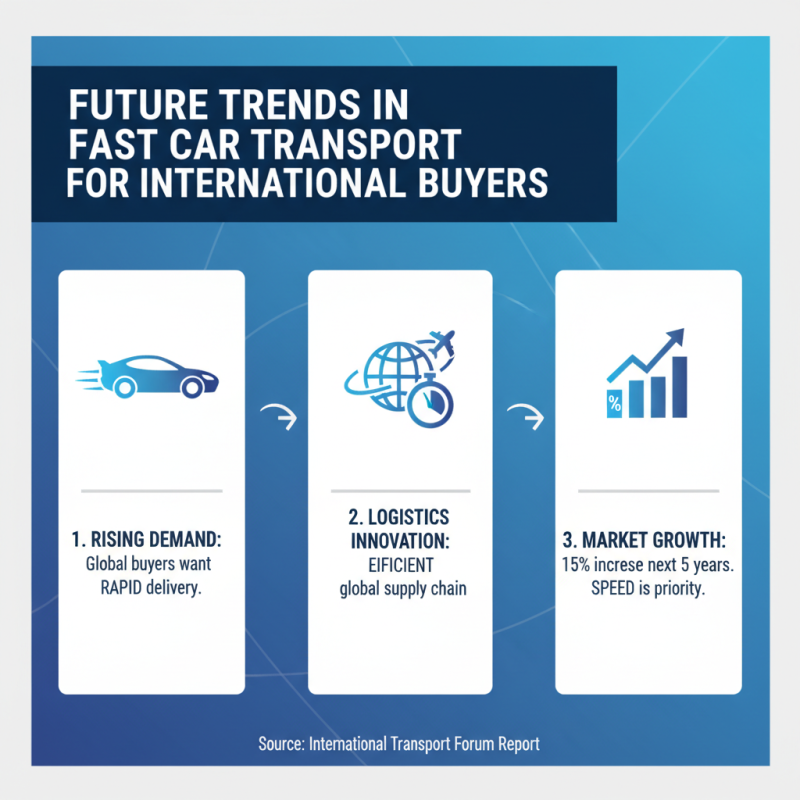
The demand for fast car transport is rising. Global buyers want efficient delivery to meet consumer expectations. Trends indicate a growing focus on logistics innovation. According to a recent report by the International Transport Forum, the global logistics market is expected to grow by 15% over the next five years. This reflects a shift towards prioritizing speed in the supply chain.
Technological advancements are reshaping car transport. Digital platforms allow real-time tracking. This transparency builds trust between buyers and suppliers. Yet, the industry faces challenges. Unpredictable global events can disrupt shipping schedules. Buyers must remain adaptable to these changes. For instance, in 2022, over 30% of shipments were delayed due to unforeseen circumstances.
Sustainability is another trend shaping fast car transport. Businesses invest in eco-friendly transportation options. Electric vehicles are gaining traction. However, the infrastructure to support these vehicles is still developing. Reports indicate that only 10% of transport companies use electric fleets. Companies may need to reassess strategies to stay competitive.


 Track Your Shipment
 Online Enquiry
 Sign In
 English